Guides / Arrange your pantry
How to Divide a Small Pantry Into Practical Storage Zones
This guide is for a small pantry, food cabinet, or set of kitchen shelves that has enough space for the household's food but still feels difficult to put away or maintain.
What a pantry zone actually does
A practical zone is an address. It tells anyone using the pantry:
- what belongs here;
- why it belongs here; and
- when this area is full.
“Cans,” “boxes,” and “baskets” describe objects. “Weeknight cooking,” “school lunches,” and “breakfast” describe actions. Object categories can still be useful, but action-based zones often make the next task easier because the items used together remain near one another.
A zone does not need a plastic bin, a printed label, or an entire shelf. In a small pantry, the left half of one shelf can be breakfast while the right half is lunch packing. The boundary can be an existing box, a shelf support, a strip of removable tape, or simply a consistent position everyone understands.
Why copied pantry layouts stop working
A shelf map from another home cannot know:
- what your household buys;
- which meals or tasks repeat;
- who needs to reach each item;
- how heavy or awkward the packages are;
- which items require special handling;
- how far the door opens; or
- how much reserve stock you actually want.
That is why “put snacks on shelf two” is not a universal rule. Shelf two may be the easiest reach for one person and an inaccessible position for another. A useful map starts with the people, routines, and measured pantry—not a fixed vertical order.
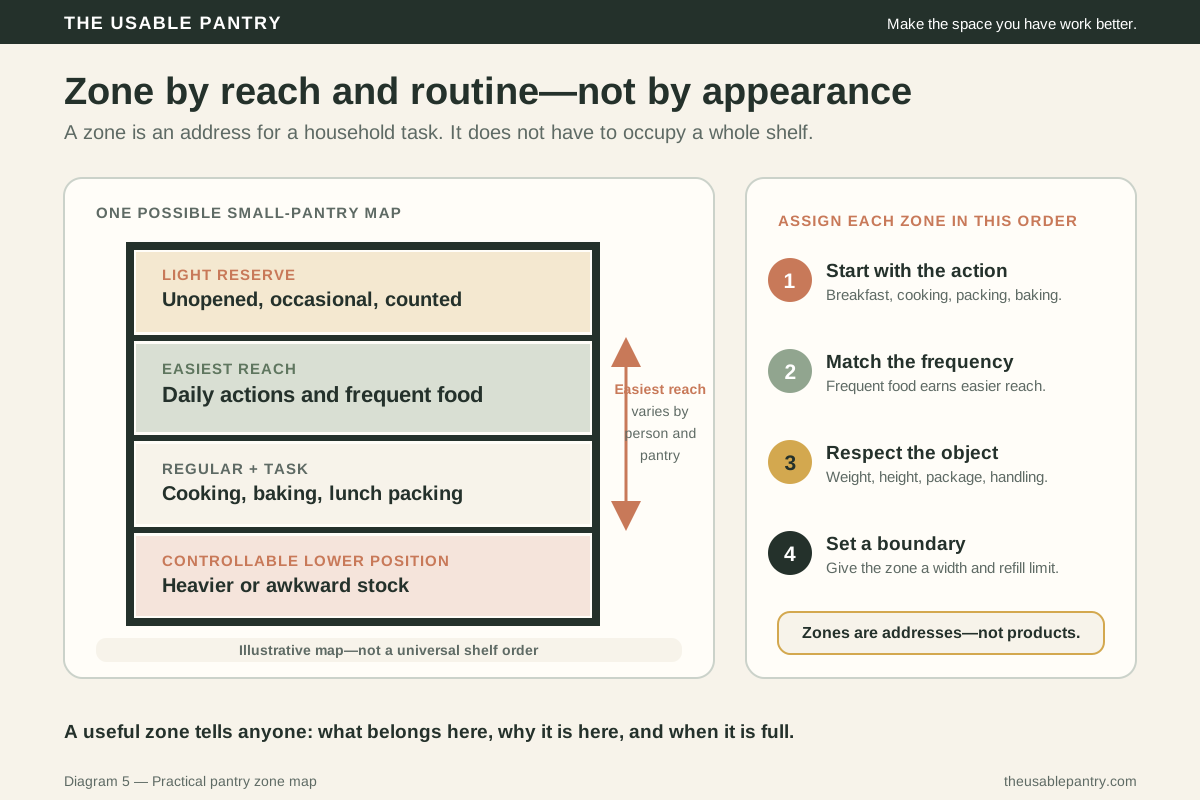 Open diagram full size
 Collect four inputs before moving food
1. The measured space
Use How to Measure a Pantry Before Buying Organizers to record the opening, width, usable depth, clear height, door and hinge clearance, and obstacles for each shelf.
The measurements prevent a zone plan from depending on a container, riser, or turntable that cannot enter or operate in the real pantry.
2. The household's repeated actions
List what people do with pantry food. Use verbs and situations:
- make breakfast;
- cook weeknight meals;
- bake;
- pack lunches;
- prepare coffee or tea;
- choose a snack; and
- refill active packages from reserve stock.
Only create a dedicated zone when the action repeats often enough to deserve a stable address. Rare items can share a clearly labeled occasional-use area.
3. Frequency and user
For each action, note who uses it and how often. Use simple labels such as frequent, regular, and occasional. Also note whether the intended user can see, reach, grip, and return the items at the proposed position.
Do not average the household into one imaginary user. A child, shorter adult, taller adult, or person with limited reach or grip may need a different position. If several people use the same category, choose a location that works for the relevant group or create a smaller accessible sub-zone.
4. Physical and handling constraints
Record anything that affects placement:
- heavy cans, bottles, or bulk bags;
- fragile glass;
- tall packages;
- items that need their original label;
- packages with household-relevant ingredient or allergen information;
- food that is not shelf stable; and
- non-food products that should not share a food-storage zone.
These constraints can override frequency. A frequently used heavy object does not belong overhead merely because it is frequent.
Build zones in four decisions
Decision 1: Start with the action
Group items that support the same repeated task. Breakfast might include cereal, oats, nut butter, and coffee filters rather than every grain in the pantry. Weeknight cooking might include pasta, rice, canned tomatoes, and the oils used most often.
Do not force an item into only one conceptual category. Put it where its most important or frequent action happens. If two actions genuinely compete for the same item, place it at their boundary or keep one active package with controlled reserve stock elsewhere.
Decision 2: Match the frequency to usable reach
Give the easiest practical position to frequent actions. Regular actions can sit next to or just outside that area. Occasional and reserve items can use less convenient space only when they remain identifiable and safely retrievable.
“Easiest” means the real user can see, take, and return the item with reasonable control. It is not a standard shelf number or height.
Decision 3: Respect the object
Adjust the map for weight, shape, stability, label needs, and storage instructions. A zone is not successful when its position makes a full container hard to control or hides information the household needs.
Use a controllable lower position for heavier or awkward stock when that reduces overhead handling for the intended user. This does not mean the lowest possible location is correct for everyone; bending, mobility, floor conditions, children, and pets can change the decision.
Decision 4: Set a boundary and a full rule
Give each zone a physical width or footprint. Then define what happens when new groceries exceed it.
Possible full rules include:
- no more than one unopened refill;
- the category must fit within the taped boundary;
- finish the active package before opening another;
- check existing stock before adding the item to the shopping list; or
- move a rare item to the occasional-use zone rather than expanding the daily zone.
The boundary turns overflow into a decision instead of letting one category silently consume the pantry.
The zones most small pantries need
These are functions, not mandatory shelf names. Combine or split them according to the real household.
Frequent-action zone
This is the easiest practical reach for daily or near-daily tasks: breakfast, frequent cooking, lunch packing, or another household priority.
Keep active packages here. A large duplicate supply does not earn frequent-zone space merely because the product is used often.
Regular task zones
Give recurring but less frequent actions a stable address. Baking, coffee, weekend cooking, or snack packing may each need only part of a shelf.
Keep a task zone small enough that unrelated items cannot disappear inside it. If baking ingredients occupy several distant shelves, decide whether one active set can move together while reserve quantities stay elsewhere.
Controlled reserve zone
Reserve stock contains unopened duplicates that the household intentionally keeps. Label the zone, set a quantity limit, and check it before shopping.
Reserve is a status, not a product category. One cereal refill and one unopened bag of rice can share reserve space even though they support different actions. When the active package empties, the reserve item moves into the relevant action zone.
Heavy or awkward zone
Use a stable position where the intended user can control oils, drinks, cans, bulk bags, or fragile containers. Avoid a layout that requires lowering heavy or breakable products from overhead.
The zone still needs a limit. A low shelf filled several rows deep can create a different reach and weight problem.
Household-specific control zone
Some homes need a clearly controlled area for food-allergy management, medical nutrition, children's access, pet food, or another household-specific concern. The organizer itself does not make that system safe.
For food allergies, keep original ingredient and allergen information available and follow the affected person's medical or household plan. FDA advises people with food allergies to read labels and avoid the food of concern; see its food-allergy guidance. Do not claim that a separate bin alone prevents allergen cross-contact.
Choose a zone map from the real problem
| What you observe | Zone decision to test | Why it may help | Check before keeping it |
|---|---|---|---|
| Breakfast items migrate across shelves | Create one breakfast action zone | Put-away and retrieval share one address | Every intended user can reach and identify it |
| Daily food competes with unopened duplicates | Split active and controlled reserve stock | Protects easiest-reach space | Reserve has a visible count and refill rule |
| Baking ingredients are scattered | Create a regular task zone | Keeps one repeated task together | Heavy or tall ingredients still have safe placement |
| Cans and bottles occupy a high shelf | Move them to a controllable position | Reduces overhead handling | The new position is stable and accessible to the user |
| One category expands after every shop | Give it a footprint and full rule | Makes overflow visible | The boundary reflects realistic household demand |
| A whole shelf is too large for one category | Divide it into two labeled sub-zones | Uses small space without extra furniture | The boundary remains clear after normal put-away |
| Rare items block frequent food | Move rare items to occasional use | Returns easy reach to frequent actions | Rare items remain labeled and retrievable |
A no-purchase zoning process
Step 1: Make a rough inventory
List action groups, active packages, unopened duplicates, and rare items. This does not need to be a detailed spreadsheet. The purpose is to see the demand each proposed zone must hold.
Step 2: Mark the easiest reach
Ask each relevant user to identify the shelf area they can comfortably see, take from, and return to. If those areas differ, note the overlap and the items each person actually needs.
Step 3: Place frequent actions first
Assign the overlap or best available area to the most frequent shared action. Add the next regular tasks around it. Do not begin with the reserve shelf.
Step 4: Fit the exceptions
Place heavy, fragile, tall, allergy-managed, non-shelf-stable, or other controlled items according to their actual requirements. When an exception conflicts with the ideal frequency map, the physical or safety constraint wins.
USDA notes that some canned products are not shelf stable and carry a “Keep Refrigerated” instruction. Follow the package rather than assuming every sealed container belongs in the pantry. See USDA's shelf-stable food guidance.
Step 5: Draw boundaries with what you have
Use removable tape, paper labels, existing boxes, trays, or the shelf's own supports. Write the action at the front: “Breakfast,” “Weeknight cooking,” or “Reserve: one refill each.”
Step 6: Test normal put-away
Use the temporary map through a normal grocery and cooking cycle if practical. Watch where new purchases land without coaching. A zone that works only when one person performs a perfect reset needs a clearer address or boundary.
Step 7: Correct the map before buying
Shrink zones that remain partly empty. Expand or split a zone only after asking whether its quantity is intentional. Move labels to where they are seen during put-away. Add a product only when a specific boundary, visibility, or retrieval function is still missing.
Worked example: four shelves, six actions
When an organizer earns a place
Common zoning mistakes
Giving every category a whole shelf
Small pantries often need multiple sub-zones per shelf. Match the footprint to real demand rather than the furniture's horizontal lines.
Making the map too detailed
If every ingredient has a separate address, normal groceries will break the system. Use the fewest zones that make put-away and retrieval obvious.
Putting all duplicates with the active food
Reserve stock can crowd the easiest reach. Keep active and reserve status visible, even when both remain near the same category.
Treating a label as enforcement
A label cannot fix a zone that is too small, hard to reach, or unrelated to the household's actual routine.
Decanting away useful information
Matching containers are optional. Preserve preparation, storage, ingredient, allergen, lot, and other package information the household may need.
Designing for only one person
A perfect layout for the person who organizes it may fail the people who cook, pack lunches, or put groceries away.
Allowing a “miscellaneous” zone to grow
Use a temporary decision area only with a review point. Otherwise it becomes a permanent location for items nobody can find.
Mixing hazardous household products into food zones
Food storage should not become the default home for pesticides or other hazardous household products. Follow each product's label and keep it in its original container. EPA specifically advises never storing pesticides in cabinets with or near food, animal feed, or medical supplies; see its pesticide-storage guidance.
Maintain the zones without a full reorganization
Use three small triggers:
- During put-away: if an item has no address, decide whether the zone name is wrong, the boundary is full, or the purchase is an exception.
- When opening the last reserve: add the product to the shopping list and move it to the active action zone.
- When a boundary overflows repeatedly: review quantity and frequency before expanding the zone or buying a container.
Do not schedule a complete pantry reset merely because one category changed. Adjust the smallest rule or boundary that failed.
Safety, storage, and accessibility notes
- Put food only where its package permits. Pantry zoning does not make a product shelf stable.
- Keep hazardous household products in their original labeled containers and follow their storage instructions. Do not use food or drink containers for hazardous products; EPA's household hazardous-waste guidance reinforces this original-container rule.
- Keep food labels available when ingredient or allergen information matters. A separate zone or bin is not proof against allergen cross-contact.
- Respect pantry, shelf, and organizer load instructions. A zone map does not verify structural capacity.
- Choose positions the intended user can see, grip, and control. Heavy items are not automatically safe simply because they are on the bottom shelf.
- Keep children's and pets' access in mind when assigning low zones, especially for glass, choking hazards, or household-controlled items.
This guide addresses household arrangement. It does not determine food safety, allergy management, poison prevention, structural loading, accessibility compliance, or medical needs.
Frequently asked questions
How many zones should a small pantry have?
Use the fewest zones that make repeated actions and put-away clear. A pantry may need four broad zones or several small sub-zones; there is no universal count.
Does each pantry zone need a bin?
No. A shelf position, label, divider, or taped boundary can define a zone. Buy a container only when it supplies a missing function.
Should zones be organized by food type or meal?
Choose the grouping that reduces repeated work. Action zones such as breakfast or weeknight cooking are useful when their items are used together. A food-type zone can work when that is how the household naturally looks for and returns the item.
Where should snacks go?
Place them according to who uses them, how often, and any household access rules. “Snack shelf” is not a universal height.
What belongs on the top shelf?
Only items the intended user can retrieve with an appropriate access method. Light occasional or reserve packages may work there, but the diagram in this guide is illustrative rather than a rule.
What should I do when a zone keeps overflowing?
Check whether purchases exceed intentional demand, the full rule is unclear, or two actions need separate boundaries. Expand the zone only after identifying which problem is real.
Can pantry zones change?
Yes. Routines, diets, household members, and package sizes change. Keep the address stable long enough to test it, then adjust the smallest boundary or rule that no longer fits.
Methodology and evidence
Continue the pantry sequence
If the shelf itself is hard to reach, use How to Organize Deep Pantry Shelves Without Losing Food at the Back. If the map depends on new organizers, check every product against How to Measure a Pantry Before Buying Organizers and the free measurement worksheet.
Found a mistake or an uncovered household routine? Send a correction.