Guides / Keep useful package information
How to Store Food in Original Packaging Without Creating Chaos
A useful pantry does not require rows of identical containers. Boxes, bags, cans, jars, and pouches can remain understandable when each has an address, visible identity, and retrieval path.
What the original package may be doing for you
Packaging can provide more than branding. Depending on the food, it may carry:
- the product identity and ingredient list;
- allergen information;
- storage and refrigeration directions;
- preparation instructions;
- date-label wording;
- manufacturer contact information;
- a lot or production code relevant to a recall; and
- a closure or barrier designed for that product.
FDA explains that labeling is required for most prepared foods and maintains current resources for nutrition and allergen labeling. See its food-labeling hub and food-allergy guidance.
Keeping the package does not guarantee correct storage, and transferring food is not automatically unsafe. The point is to identify what information or function would be lost before discarding anything.
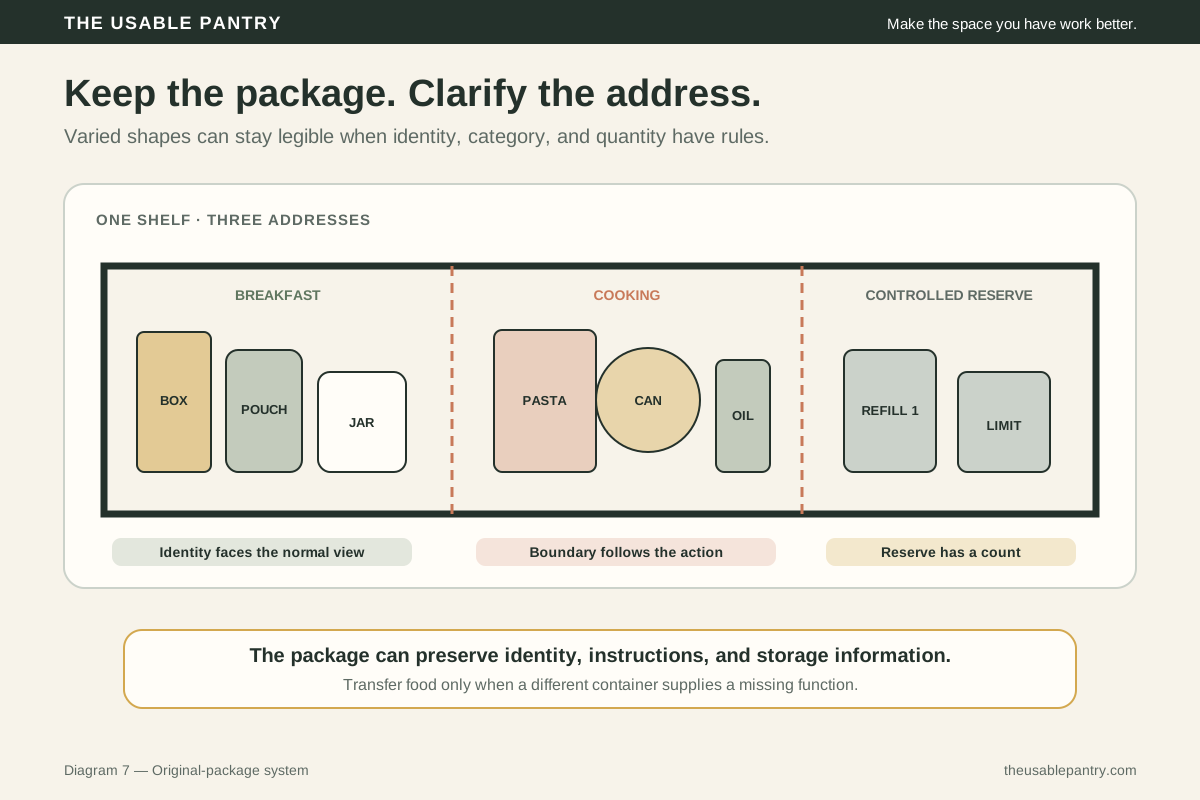 Open diagram full size
 Diagnose why packages feel chaotic
Package variety is often blamed for a problem caused by arrangement. Check for four distinct failures.
No address
The package goes wherever a gap appears. Fix the category or action address before buying a new container.
No boundary
Flexible bags spread, fall, or occupy another category. A narrow existing box, divider, clip, or shelf boundary may supply the missing control.
No visible identity
The product name, variety, or instruction panel faces sideways or backward. Turn the useful panel toward the normal viewing direction, or add a front label that does not replace the original information.
Too many states mixed together
Open packages, unopened refills, and occasional stock occupy the same easiest- reach area. Keep the active package in its action zone and give reserve a count and a separate footprint.
Build an original-package system
Step 1: Decide what must remain available
For each food, identify which information the household uses. Ingredient and allergen needs, preparation instructions, product identity, and storage directions deserve deliberate preservation.
USDA advises checking packages for holes that could admit moisture or pests and notes that dry goods may receive extra protection from a separate plastic or glass container. See USDA guidance for dry goods. That does not mean every intact package needs a second container; choose extra protection for the actual package and environment.
Step 2: Group by use, not packaging material
Put cereal boxes and an oatmeal pouch together when they serve the same breakfast action. Do not separate every bag from every box merely to create a uniform row.
Step 3: Give flexible packages support
Stand bags inside a narrow existing box, open basket, or divided shelf area. Keep the category label at the front. Avoid a deep mixed bin that hides product identity and requires unloading.
Step 4: Separate active and reserve
Keep one active package where the food is used. Place intentional unopened refills in a labeled reserve area with a maximum quantity. Check reserve before shopping.
Step 5: Use a transfer record when decanting
If a transfer genuinely improves pouring, protection, or access, preserve the information the household needs. That might mean retaining the labeled package, photographing relevant instructions for private reference, or applying an accurate removable label. Do not create a partial label that could misidentify food or omit household-critical information.
Choose the least complicated control
| Package problem | First control to test | What remains visible | When decanting may add value |
|---|---|---|---|
| Tall boxes hide short pouches | Separate height groups within one action zone | Product identity and instructions | A regularly used dry product needs easier pouring |
| Flexible bags collapse | Stand them in an existing narrow box | Original label at the front | The package repeatedly tears or cannot reseal |
| Several opened bags of one food exist | Finish or combine only when identity and storage remain certain | One active identity | A suitable container protects one clearly identified product |
| Refills crowd active packages | Create counted reserve | Active and unopened states | Decanting does not solve excess quantity |
| Labels face away | Turn the package or add a front category label | Original package information | Transfer is unnecessary |
| Packaging is damaged | Follow product-specific damage and storage guidance | Lot and identity when safe to retain | A sound secondary container may protect dry goods after assessment |
Worked example: three formats, one breakfast zone
When transferring food can be reasonable
Decanting can supply a real function when:
- a dry product's package cannot reseal and needs additional protection;
- a person can pour safely and independently from a different shape;
- a measured container fits a shelf where the package cannot operate; or
- one clearly identified bulk product needs a stable active quantity.
It can create new failures when several similar powders become indistinguishable, instructions disappear, the container is difficult to clean, the lid needs extra operating height, or a large vessel encourages excessive reserve stock.
Common mistakes
- Treating visual uniformity as the main pantry function.
- Putting many original packages inside one deep unlabeled bin.
- Removing information needed for allergies, preparation, or storage.
- Using a container larger than normal household demand.
- Mixing active and reserve stock because the packages match.
- Assuming every can, pouch, or carton is shelf stable without reading it.
- Creating homemade labels that make two similar products easy to confuse.
Frequently asked questions
Are original boxes bad for pantry organization?
No. A box can stand upright, expose identity, and use rectangular shelf space well. Its suitability depends on the shelf, package condition, household use, and retrieval path—not whether it matches another package.
Can I put a food bag inside a basket?
Yes when the basket supplies useful support and the original package remains identifiable and retrievable. Avoid mixing unrelated bags so deeply that the basket becomes another hidden shelf.
Should I cut instructions from a box?
Preserve information in a way that remains accurate and connected to the right food. The safe method depends on the product and household. A loose clipping that can be separated or confused may be worse than retaining the package.
Does a clear container solve identification?
It shows appearance, not necessarily identity, ingredients, allergens, instructions, or storage needs. Transparent walls are one visual cue, not a complete label.
Methodology and evidence
Continue from the package system
Use How to Divide a Small Pantry Into Practical Storage Zones to assign addresses before deciding whether any package needs another container.
Found a packaging or labeling case this guide misses? Send a correction.