Guides / Choose an organizer function
Clear Bins vs. Opaque Baskets: Which Belongs in Each Pantry Zone?
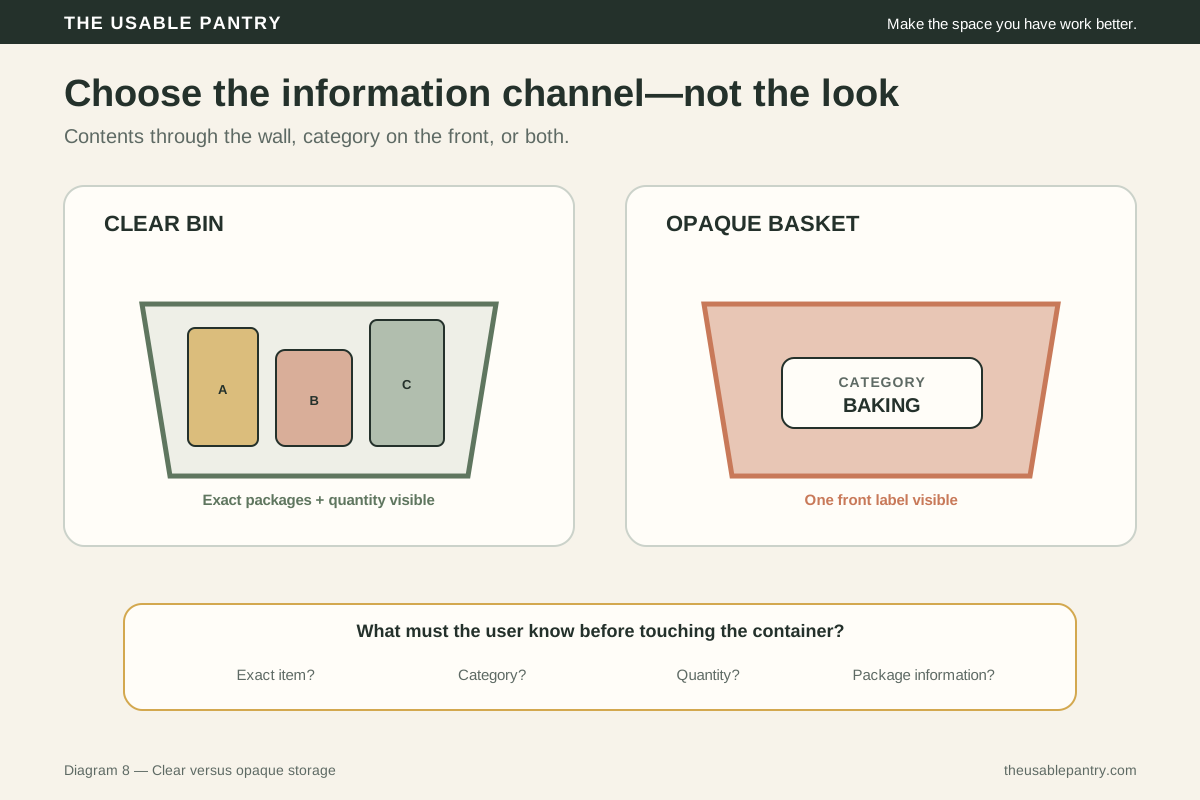
Transparency is a visibility property, not an organization system. An opaque basket with one clear label can be easier to understand than a transparent bin filled with unrelated packages. A clear bin can be useful when quantity or product identity must be visible from the normal viewing angle.
Start with the decision the user needs to make
Ask what someone should know before touching the container:
- Which category is this?
- Which exact package is inside?
- How much remains?
- Is there an unopened refill?
- Does the package carry instructions or information the household needs?
Clear walls help only when the relevant information is actually visible. An opaque wall can reduce distracting detail, but then the front label and category discipline carry more responsibility.
 Open diagram full size
 Clear bins: what they solve and what they do not
Clear sides may help a user see package color, product identity, or remaining quantity without pulling the bin. This can be useful at eye level or on a shelf where the side is visible.
They do not guarantee:
- that the category is coherent;
- that back items are reachable;
- that the bin is light enough to move;
- that original package information faces outward;
- that the material suits the intended use; or
- that the tapered interior holds the expected amount.
A clear front becomes less informative when labels face sideways, several categories mix together, or glare and viewing angle obscure the contents.
Opaque baskets: what they solve and what they do not
Opaque storage can make a shelf visually quieter and create one strong category label. It may hide irregular package shapes that would otherwise compete for attention.
It also hides quantity and product identity unless the user pulls it, looks from above, or maintains an inventory signal. An opaque basket is a poor choice when forgotten refills or accidental duplicates are already the main problem.
Choose by zone, not by a whole-pantry rule
| Zone or behavior | Clear storage may help when | Opaque storage may help when | Check before choosing |
|---|---|---|---|
| Daily breakfast | Exact packages and quantity guide choices | One familiar category label is enough | Normal viewing angle and user reach |
| Snacks or lunch packing | Users need to see available varieties | Visual detail distracts from one controlled category | Household access rules and package labels |
| Baking | Similar ingredients remain in original labeled packages | A front task label reduces scattered visual detail | Do not obscure identity or allergen information |
| Controlled reserve | Remaining refill quantity must be visible | A written count is reliably maintained | Reserve limit and shopping habit |
| Deep pull-forward lane | Side visibility remains useful while pulled | The front label defines one stable lane | Loaded weight and full-depth retrieval |
| High shelf | Contents can be identified from below | A large front label is more readable than package detail | Safe access method and controllable load |
Four checks matter more than color
1. Viewing angle
At eye level, the front and side may be visible. On a high shelf, the user may see only the bottom edge. On a low shelf, the top opening can matter more than the wall. Evaluate transparency from the real position.
2. Category stability
If a category changes every week, an opaque label may become inaccurate. If a clear bin invites unrelated packages into every remaining gap, transparency does not preserve the category either. Set a boundary and full rule.
3. Movement
Measure the opening, shelf, handle, and removal path. Load the temporary category in an existing box to estimate whether a full bin remains controllable. Large clear bins and large opaque baskets can both become heavy.
4. Information preservation
The wall does not replace the package. FDA maintains labeling and allergen resources because product identity and package information can matter. See FDA food-labeling resources.
Worked example: choose storage for three zones
Test the decision without buying
Use an existing transparent container, cardboard box, or paper screen around a clear box. Stand at the normal viewing position and ask someone in the household to identify the category, locate a target package, and estimate reserve quantity.
Then load the temporary container with a realistic category and test the full movement. The test can expose visibility and handling problems; it cannot prove durability, material safety, or long-term cleaning performance.
Common mistakes
- Choosing one container style for every shelf.
- Assuming visible contents equal an understandable category.
- Using an opaque basket without a maintained label or quantity rule.
- Ignoring the view from above or below.
- Comparing listed capacity without checking exterior shape and taper.
- Filling a large bin until it becomes difficult to control.
- Treating transparency as a substitute for original package information.
Frequently asked questions
Are clear bins always better for ADHD or memory?
People differ, and this guide does not make a medical claim. Some users may benefit from visible contents; others may find one strong label easier than many visible packages. Test the actual task and user rather than applying a universal diagnosis-based rule.
Do opaque baskets make people forget food?
They can when contents and quantity are not otherwise visible. A narrow category, front label, reserve count, and regular use can make an opaque basket legible.
Should every bin have a label?
Use a label when it reduces ambiguity. A fixed shelf position with one obvious category may not need another object. Labels should describe the household's real grouping rather than a decorative taxonomy.
Does transparent plastic mean food-safe?
No. Appearance does not establish material claims or intended use. Check the manufacturer's information for the specific product and how the food will be contained.
Methodology and evidence
Continue the organizer decision
First define the zone with How to Divide a Small Pantry Into Practical Storage Zones, then measure it with the pantry measurement guide.
Found a visibility or identification case this comparison misses? Send a correction.