Guides / Choose the movement first
Bin, Turntable, or Shelf Riser? Choose the Movement You Need
These organizers do not perform the same job. A bin translates, a turntable rotates, and a riser elevates. Each can improve access when its movement matches the shelf problem. Each can also consume space while leaving the original problem untouched.
The fastest way to choose is to ignore the product names for a moment and watch what must happen before one target item reaches the user's hand.
Start with the failed movement
Stand in the normal position and retrieve one item. Notice what goes wrong:
- Several related packages must come forward together. Test a bin.
- One bottle hides behind another. Test rotation with a turntable footprint.
- A short back row cannot be seen. Test elevation with a shelf riser.
- The target is visible but still out of reach. None of these may be enough; the category may need a shallower position or a pull-forward system.
- Nothing is difficult to retrieve. Leave the shelf alone. Empty space is not automatically a storage failure.
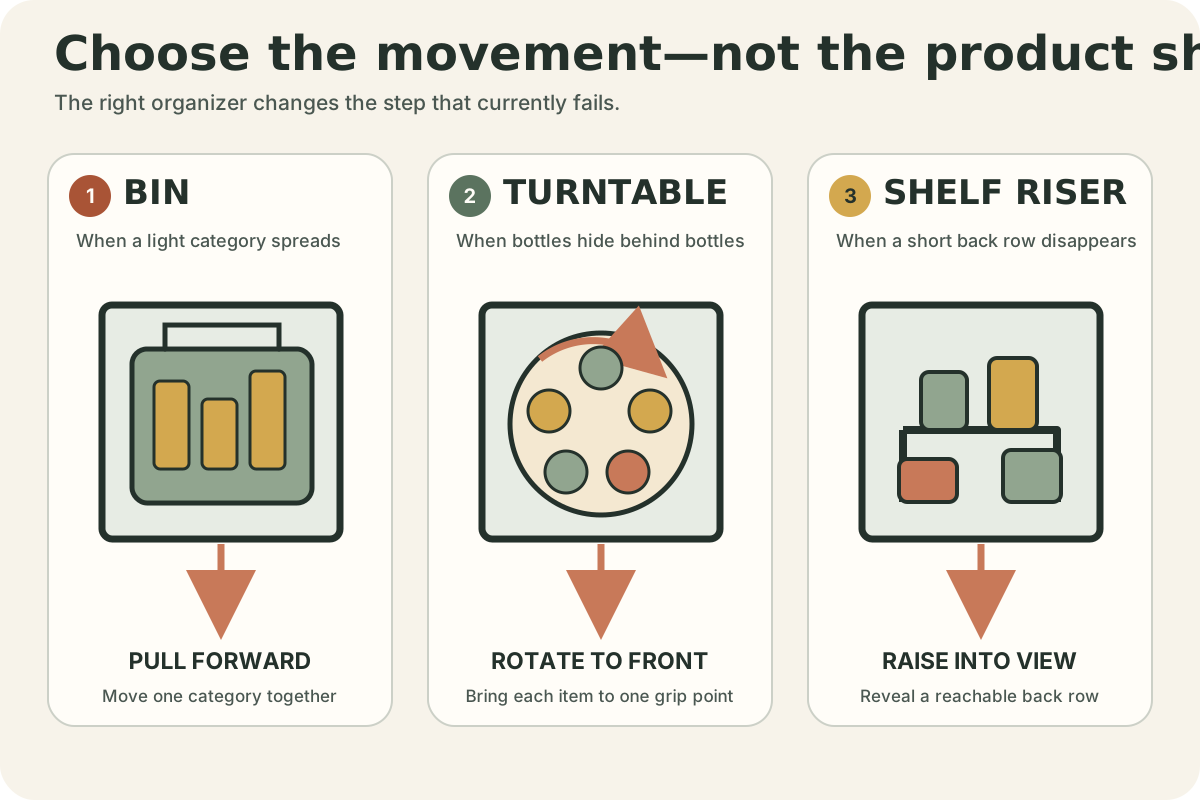 Open diagram full size
 Bin: move one category forward
A bin can make a deep shelf behave like a pull-forward lane. Instead of reaching past the front package for one item at the back, the user grips the container and brings the category toward the aisle.
This function is most useful when:
- several light packages belong to one stable category;
- the category spreads or collapses across the shelf depth;
- the loaded bin can pass through the narrowest opening;
- the handle remains usable at the real shelf height; and
- the user can control the complete loaded movement.
A bin is a poor fix when it becomes an unsorted box, when the load becomes too heavy, or when the user must remove the bin above it first. Clear or opaque walls change what the reader can see, but they do not change this basic movement. Read Clear Bins vs. Opaque Baskets after deciding that a bin is the right function.
Turntable: rotate individual items to the front
A turntable gives several positions one shared retrieval point. The user rotates the platform until the intended bottle or jar arrives at the front, then grips and lifts it.
This function is most useful when:
- stable bottles or jars hide behind one another;
- every intended item fits within the full rotating footprint;
- shoulders, handles, and spouts clear the walls during rotation;
- the user can identify and stop the intended item at the front; and
- the improved access earns the circular footprint on a rectangular shelf.
A turntable is a poor fix for flexible packets, an overflowing category, or a narrow shelf where the unused corners displace necessary food. Tape the complete circle before buying. The detailed geometry is explained in When a Turntable Helps—and When It Wastes Pantry Space.
Shelf riser: reveal a short back row
A riser changes the sight line by lifting one row above another. It is not a pull-forward device. The elevated item still has to be reached, gripped, lifted, and returned without dismantling the front row.
This function is most useful when:
- short cans or jars disappear behind a similar front row;
- elevation makes their labels visible from the normal position;
- the raised row remains within comfortable control;
- the riser, item, and removal movement fit within the clear height; and
- the feet and load suit the shelf and manufacturer instructions.
A riser is a poor fix when reach—not visibility—is the real problem. It can also create a newly cramped level when the shelf above leaves too little removal space. Compare elevation with pull-forward drawers in Shelf Risers vs. Stackable Drawers.
Compare the three functions
| What happens now | Test first | Movement created | Skip or reconsider when |
|---|---|---|---|
| Light packets spread across a deep shelf | Bin | Whole category moves forward | Loaded bin is heavy, mixed, or hard to grip |
| Bottles hide behind bottles | Turntable | Each item rotates to one front position | Items overhang or the circle wastes needed corners |
| Short cans vanish behind a front row | Shelf riser | Back row rises into view | Raised items remain unreachable or lack clear height |
| One category overflows every boundary | Quantity limit first | No organizer fixes unlimited demand | The same overflow would surround or fill the product |
| Target is visible but requires moving several unrelated items | Retrieval-path test | Often pull-forward or rotation | Elevation changes only the view |
| Shelf already works | Nothing | No extra movement needed | Buying would add steps without solving a failure |
Measure the organizer while it operates
All three products must first pass the narrowest opening and fit the resting space. Then each requires a different operating measurement.
For a bin, measure the handle, loaded grip, forward travel, lift, tilt, and turn. For a turntable, measure the entire rotating circle using the widest part of every item—not only its base. For a shelf riser, add riser height, item height, and the clearance needed for a hand to remove the raised item.
Start with the complete procedure in How to Measure a Pantry Before Buying Organizers.
Worked example: three problems on one shelf
Run three no-purchase tests
Use a small existing box to simulate the bin movement with the realistic category inside. Use paper or cardboard to mark a turntable circle and move item footprints through a full rotation. Use a stable, unloaded height mock-up only to inspect the riser's sight line and removal clearance.
These tests answer one question: does the proposed movement solve the observed failure in this specific position? They do not establish product strength, stability, load capacity, durability, material safety, or manufacturer fit.
Common mistakes
- Buying the organizer before naming the access failure.
- Measuring the empty product but not its loaded movement.
- Treating unused height or depth as something that must be filled.
- Using a large bin for unrelated categories until it becomes heavy and opaque.
- Filling the corners around a turntable until it cannot rotate.
- Raising a row that remains impossible to reach.
- Assuming an organizer can control a category with no quantity boundary.
Frequently asked questions
Which organizer stores the most food?
That is not the first decision. The organizer that holds the most can still make the target harder to identify or retrieve. Compare successful retrieval within the measured footprint, not advertised capacity alone.
Can I combine a bin, turntable, and shelf riser?
Different shelf zones can justify different functions. Combining products in one stack or footprint creates new clearance, loading, and stability questions. Use only configurations supported by each manufacturer and test the complete movement.
Are bins the safest default?
No universal organizer is the safest or best default. A bin may simplify a light category, but it may also become difficult to lift or hide its contents. Start with the actual user, load, position, and movement.
What if none of the three works?
Reduce the category, change its shelf position, adjust an appropriate shelf, or use a different access pattern. The deep-shelf guide explains pull-forward lanes, visible back rows, and managed reserve zones in more detail.
Methodology and evidence
Continue with the detailed guide
Choose the guide that matches the movement you want to test.
Found an organizer movement or access case this guide misses? Send a correction.