Guides / Test rotational access
When a Turntable Helps—and When It Wastes Pantry Space
A turntable changes access by rotation. That can be valuable, but only when the target items, shelf geometry, and viewing angle support the movement.
The function: bring positions to the user
On a successful turntable, the user does not reach behind a front bottle. They rotate the platform until the target arrives at a controllable front position.
The platform still needs:
- enough diameter for the intended item bases;
- clearance from walls, hinges, shelf lips, and neighboring products;
- control of tall or unstable items during rotation;
- a useful front position where the item can be gripped and lifted; and
- a category narrow enough that every position remains understandable.
 Open diagram full size
 Why a circle changes rectangular capacity
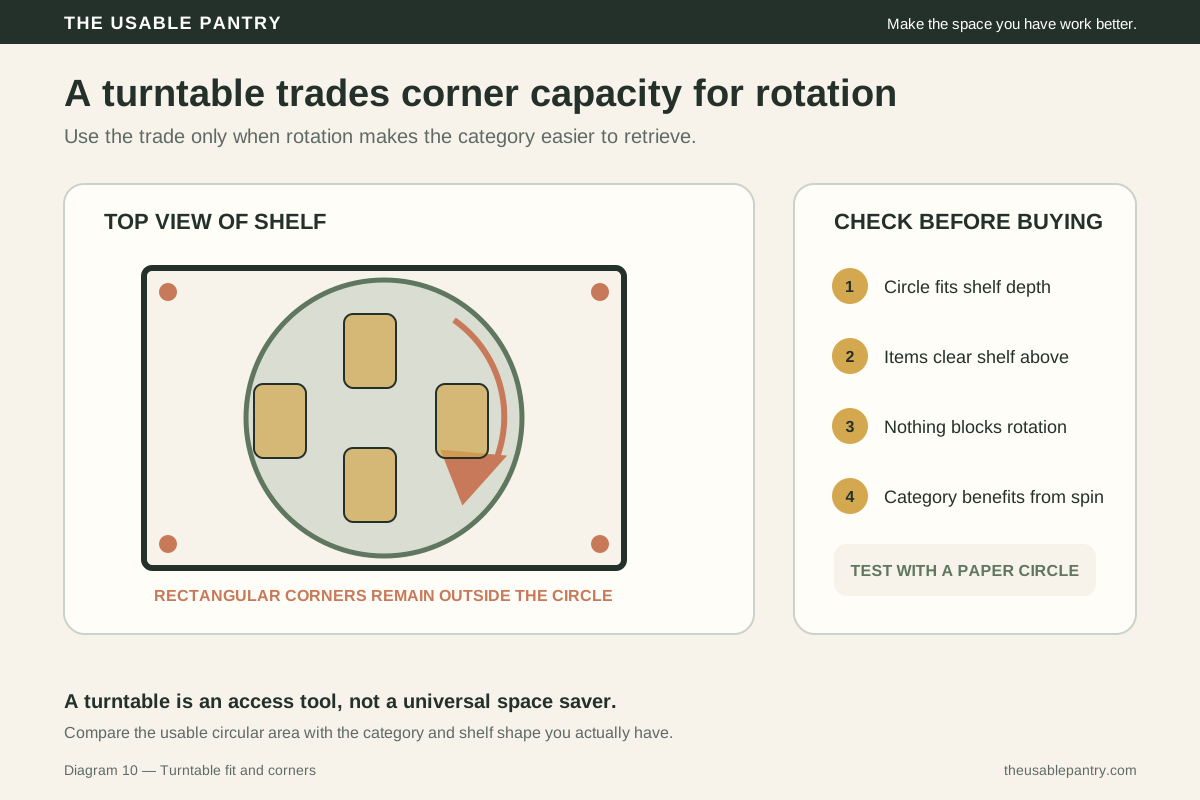
A round platform inside a rectangular shelf leaves corner areas outside the circle. Those corners are not automatically wasted: they may provide grip, clearance, or space for a separate narrow category. But they cannot hold items that block rotation.
The correct comparison is not “turntable versus perfectly packed shelf.” It is:
Does the rotating footprint make the intended items easier to see, reach, and return than the best simple arrangement using the same shelf area?
Measure the complete rotating system
Record the narrowest opening, usable shelf width and depth, clear height, and obstacles. Then check:
- platform diameter and total exterior diameter;
- any raised rim or center post;
- the widest part of every bottle or package;
- handles, spouts, labels, and overhang;
- clearance through a full rotation;
- space to grip and lift the item; and
- the user's view from the normal reach position.
An item base can fit on the platform while its shoulder or handle collides with a wall. Test the largest exterior profile, not only the footprint touching the tray.
Choose rotation by the failure
| Shelf problem | Turntable may help when | Another pattern may be better when | Test first |
|---|---|---|---|
| Bottles hide behind bottles | Each stable bottle can rotate to one front grip point | Bottles are too tall, wide, or unstable | Mark diameter and rotate cardboard item footprints |
| Small jars form several rows | Labels become visible as each jar turns | A stable riser exposes all labels at once | Compare retrieval steps |
| Corner cabinet has a difficult reach | Rotation brings the intended group within control | Door, center stile, or corner shape blocks the path | Full opening and sweep |
| Flexible packets collapse | A contained divided turntable is designed for them | A pull-forward lane controls the category more simply | Realistic loaded movement |
| One category keeps overflowing | The intended group fits within a strict count | Rotation cannot solve excess demand | Quantity and full rule |
| Shelf is narrow and rectangular | A small round group earns the footprint | Lost corners displace necessary food | Tape circle versus rectangular zone |
Worked example: test a 30 cm turntable
A no-purchase rotation test
Draw or tape the proposed circle on the shelf. Cut paper or cardboard footprints for the intended items, including the widest profile when it differs from the base. Move each position around the circle and check for collision.
Then simulate retrieval: can the intended user identify, rotate, stop, grip, lift, and return each item from the normal position? A footprint test cannot prove bearing quality, rim control, load capacity, stability, or durability.
When a turntable is the wrong tool
Skip or reconsider it when:
- most food is rectangular and already accessible in a front row;
- the diameter blocks a neighboring necessary category;
- tall bottles become unstable during rotation;
- package shoulders or handles extend beyond the edge;
- the shelf opening prevents insertion even though the interior is wide;
- a deep category needs to pull forward together; or
- the category has no quantity limit and will spill around the platform.
Common mistakes
- Measuring the shelf but not the door opening.
- Checking item bases while ignoring wider shoulders and handles.
- Filling the corner areas so rotation becomes blocked.
- Using one large platform for unrelated categories.
- Assuming visibility guarantees a safe grip and lift.
- Choosing diameter by advertised capacity rather than intended items.
- Using rotation to manage unlimited reserve stock.
Frequently asked questions
Is a larger turntable always better?
No. A larger diameter can hold more positions but consumes more rectangular width and depth, may not pass the opening, and increases the sweep that must remain clear.
Can I place a turntable in a pantry corner?
Yes when the platform and every item clear the actual corner, door, trim, and adjacent categories through a full rotation. Tape the circle first.
Are turntables good for cans?
They can bring cans forward, but a riser may expose several labels without rotation and a lane may use rectangular depth more efficiently. Compare the retrieval path and footprint.
What should go beside the turntable?
Only something with a defined footprint outside the complete rotation sweep. Do not turn clearance into an unplanned overflow gap.
Methodology and evidence
Continue the organizer decision
Compare rotation with elevation in Shelf Risers vs. Stackable Drawers and with pull-forward lanes in How to Organize Deep Pantry Shelves Without Losing Food at the Back.
Found a turntable geometry or access case this guide misses? Send a correction.