Guides / Stabilize a wire shelf
How to Organize a Pantry With Wire Shelves
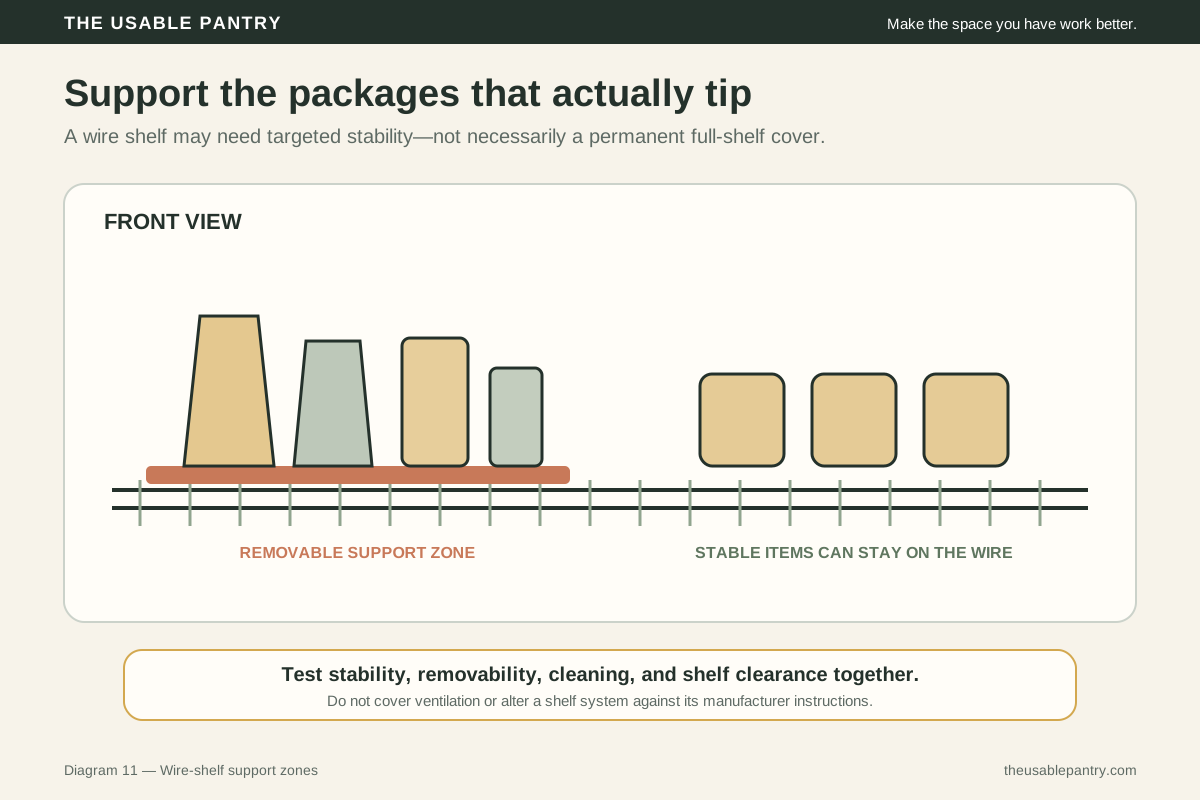
Wire shelves create a different support surface from a solid board. Package feet can straddle or fall between wires, small containers can tilt, and bins can catch as they move. The solution is not automatically to cover every shelf.
Diagnose the wire-specific failure
Separate surface problems from general pantry problems.
Wire-specific failures include:
- narrow feet or package corners enter the gaps;
- a flexible bag sags between wires;
- a bin edge catches during pull-forward movement;
- a small jar tilts on an uneven footprint; or
- the wire direction fights the intended sliding direction.
General failures—mixed categories, excessive duplicates, poor reach, hidden back rows—still need category, quantity, and retrieval decisions. A liner cannot repair an unclear pantry system.
 Open diagram full size
 Record the shelf as a support pattern
Use the standard pantry measurements, then add:
- distance between wires at the relevant position;
- wire direction from front to back or side to side;
- front rim or lip height;
- shelf brackets and interruptions;
- any visible slope, movement, damage, or corrosion; and
- the support footprint of the intended package or organizer.
Do not calculate or assume load capacity from wire thickness, spacing, or visual condition. Identify the shelf or system documentation and follow its stated loading, installation, and maintenance requirements.
Choose the smallest stable footprint
Existing tray or board intended for the use
A removable tray can support several small packages while preserving one clear category movement. It must fit through the opening, sit as intended, remain controllable when loaded, and avoid creating an unstable bridge across supports.
Bin or basket
A container can prevent packets and small packages from falling between wires. Its bottom must sit predictably on the shelf, and its edges and feet must not catch during retrieval. A full bin can be much harder to control than the loose items it replaces.
Shelf liner
A liner creates a broader continuous surface. Before using one, check the shelf and liner manufacturer's compatibility, attachment, heat and moisture context, cleaning, and whether covering the shelf changes useful airflow or conceals a condition that needs inspection.
The liner still needs accurate cuts around posts, brackets, and lips. A curled or sliding edge can create another movement failure.
Position only
Large boxes and cans with broad stable footprints may need no added surface. Place them where their bases are fully supported and where labels and retrieval remain practical.
Match the control to the item
| What the item does on wire | First test | Why it may work | Check before keeping it |
|---|---|---|---|
| Small jar tilts | Put the category on a stable removable tray | Creates one continuous footprint | Loaded tray control and edge clearance |
| Snack bags sag | Stand them in an existing narrow box | Supports flexible packages and defines a lane | Moisture, cleaning, and realistic weight |
| Wide box sits securely | Use position only | Avoids unnecessary material | Entire base support and retrieval path |
| Bin catches on front wire | Change orientation or test a smoother compatible base | Aligns movement with support pattern | Door, lip, and full pull path |
| Many unrelated items wobble | Group by action before choosing support | Reduces random footprints | Category remains understandable |
| Whole shelf seems difficult | Test a compatible removable liner section | Reveals whether surface continuity is the real need | Compatibility, attachment, airflow, and cleaning |
Worked example: support one 26 cm lane
Test movement in the real wire direction
Place a temporary category on a suitable existing tray or box. Move it through the full path: over the front wire, past the frame and door, and back to its resting position. Check whether feet, corners, or flexible walls enter the gaps.
If the product needs sliding but the shelf surface resists or catches, do not force it or assume a liner is sufficient. Change the movement pattern, position, or product type after reviewing compatibility and instructions.
Common mistakes
- Treating every pantry problem as a wire-surface problem.
- Covering the entire shelf before testing one footprint.
- Ignoring the direction a bin needs to slide.
- Assuming a flat liner increases structural capacity.
- Hiding damage, moisture, or corrosion beneath a liner.
- Using a bin whose feet fall into the same gaps as the packages.
- Loading a pull-forward category until it is difficult to control.
Frequently asked questions
Do wire shelves always need liners?
No. Broad stable packages may already work. Add support where small footprints, sagging, or movement actually fail, and verify compatibility before covering a shelf.
Can a liner make a wire shelf stronger?
Do not assume so. A liner changes the contact surface; it does not establish or increase the shelf system's rated load. Follow the shelf documentation.
Which direction should bins face?
Choose the orientation that fits the opening, rests predictably on the support pattern, and permits the intended retrieval movement. Test the actual bin or a full-size footprint.
What if I cannot identify the shelf manufacturer?
Avoid making structural or loading assumptions. Use conservative arrangement, inspect the condition, and seek appropriate product or property guidance before altering or heavily loading the system.
Methodology and evidence
Continue from the support surface
Measure the shelf and opening with How to Measure a Pantry Before Buying Organizers, then choose a retrieval pattern with the deep-shelf guide.
Found a wire-shelf support case this guide misses? Send a correction.